JOT

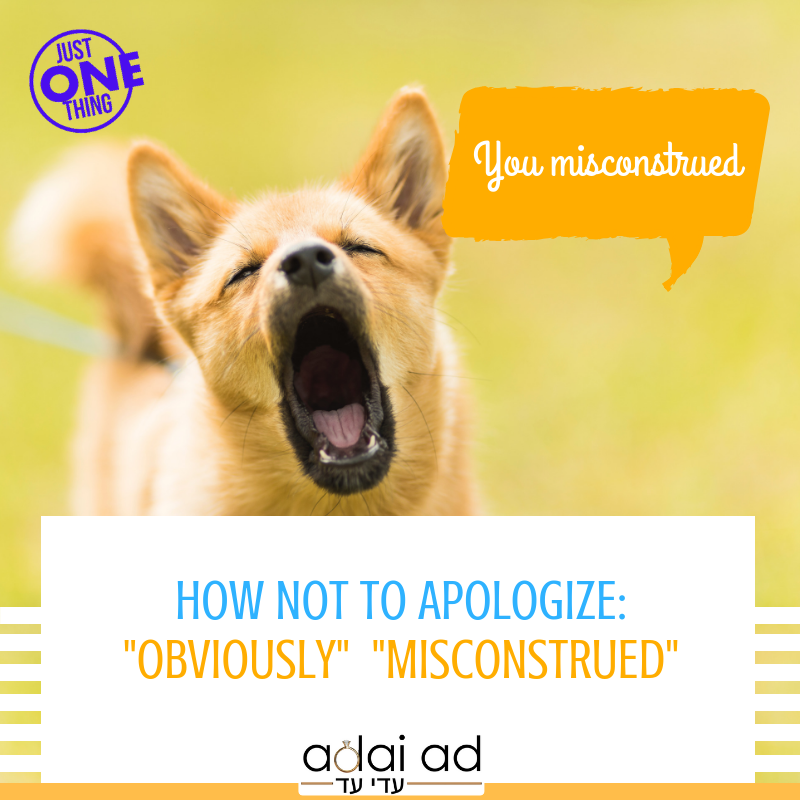
How not to apologize: using words like “obviously” and “misconstrued”

Two words that have no place in any apology: “obviously” and “misconstrued.” – “I obviously didn’t mean to hurt you.” The word “obviously” is not a humble word. If you obviously didn’t mean the horrible thing you said, why did you say it? And if something really is obvious—if, say, you obviously didn’t intend to […]

How not to apologize: using words like “obviously” and “misconstrued” Read More »
Match your words to the intensity of your emotions

Every emotion has degrees, from diminished to fiercely intense. Different words have different temperatures. Monitor your language and make sure your language isn’t minimizing or exaggerating the intensity of emotions. Match your words to the actual intensity of your emotions. –> Are you feeling blue, stressed, heartbroken, dejected, or depressed? –> Are you feeling satisfied,

Match your words to the intensity of your emotions Read More »

Scroll to Top